Why You Should Add Coconut Oil to Your Pantry

My brother-in-law is a dieting nut and exercise addict. I am a health and wellness junkie and wannabe nutritionist. Put us together and you’ve got two people who think they know it all, but usually end up in a heated debate over whose wellness path is the correct one to follow.
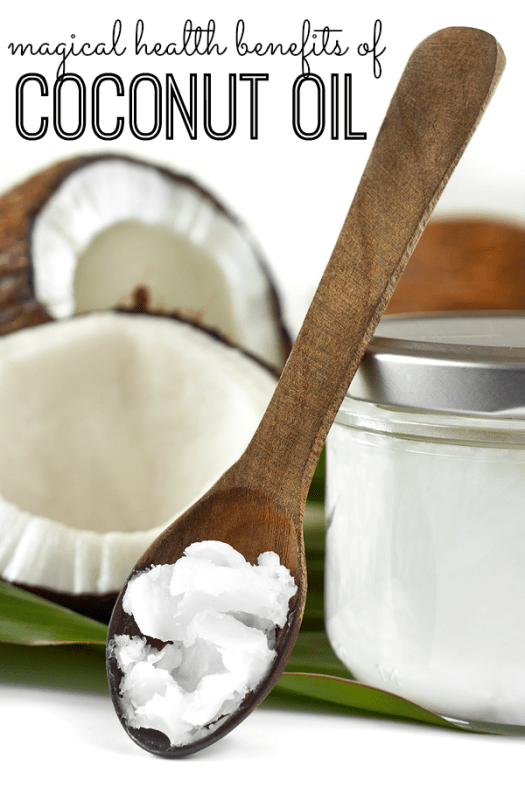
A few weeks ago, he and I were engaging in one of our usual banters. He mentioned that he’d just bought a jar of coconut oil—he wanted to see what all the fuss was about and figured, hey why not? It wasn’t until he got home that he read the label and gasped: 14 grams of saturated fat per tablespoon!

“That stuff is HORRIBLE for you!” he told me. “It’ll give you a heart attack!”

Oh silly boy, time for me to set you straight.

“Listen up, know-it-all,it’s not horrible for you; it’s just the opposite,” I told him. “Yes, it has saturated fat, but there’s more to the story than that—much more.”

I then proceeded to tout all the benefits of coconut oil, as I understood them. But I could see by his expression that he was not sold. He wasn’t hearing what I had to say, he was just seeing ’14 grams of saturated fat’ in his mind’s eye. My words were falling on deaf ears. So I went home and did some additional research and then flooded him with all sorts of eye-opening information. I was simply determined to prove my point.

I’m happy to report that I was successful in my endeavors. He’s now believer.

So what was it that changed his mind? See for yourself.

Promotes weight loss: Unlike the vast majority of naturally-occuring saturated fats out there, coconut oil is comprised primarily of Medium Chain Triglycerides (MCT). MCTs have been shown to increase energy expenditure, boost metabolism, help burn more calories, lower body fat mass and reduce body weight.

Helps manage diabetes:  Coconut oil helps to balance blood sugar by slowing the absorption of sugars into bloodstream. It’s processed in the liver where it is quickly converted to energy. This not only improves insulin sensitivity, but also leaves little behind to be stored as fat.

Improves cholesterol profile: Coconut oil has been clinically proven to increase HDL cholesterol and lower the overall cholesterol ratio. When looking at these specific cholesterol values, coconut oil is believed to be more protective against heart disease than an other dietary fat.

Helps fight viruses and disease: Coconut oil is comprised predominantly of lauric acid, a substance also found in breast milk. Lauric acid converts to monolaurin in the body where it gains its antimicrobial, antibacterial, and anti fungal properties. It helps the body to fight off viruses and bacteria and also supports the immune system.

Improves cognitive function: A 2004 study published in Neurobiology of Aging found that the MCTs in coconut oil improved cognitive function in older adults with memory disorders such as Altzeimer’s.

Aids in digestion. With its antimocrobial properties, coconut oil helps ward off various bacteria, fungi, and parasites that can cause indigestion. It’s also been shown to help in the absorption of other nutrients such as vitamins, minerals and amino acids.

May help to prevent cancer: Though coconut oil in the prevention of cancer is still being researched, several studies of lab animals have shown promising anticancer results.

Promotes healthy skin and hair: Coconut oil can increase the moisture and lipid content of the skin. It’s also been shown to protect the hair from sun damage, blocking nearly 20% of the sun’s ultraviolet rays.

These are just a few benefits. Coconut oil is also believed to help with thyroid function, tissue repair, sugar cravings, pancreatitis, chronic fatigue syndrome, kidney disease, bladder infections and more.

Coconut oil has been a mainstay in my diet for the last year or so. I use it generously every single day—for cooking, in my smoothies, on toast, in my oatmeal and so on. I use coconut cream in my coffee and also pour it over fresh berries for a night time snack. And no, I haven’t gained a pound. Just the opposite in fact. In the last year alone, I’m down 10 lbs. How’s that for proof!

Don’t take my word for it. Try it for yourself.

Why We Should Let Our Kids See Us Fail

Fail

I’m a big believer in failure.

As parents, we feel this automatic instinct to hide our failures from our kids. And it makes sense why: we’re their role models for everything. Since we are their guardians, the responsibility falls on us to teach them how to handle every situation in the most appropriate way.

So, what happens if we make a mistake in the process — worse yet, what if they SEE us make a mistake? What does that mean for them and their learning process? How will that affect their understanding of what’s right and what’s wrong?

In order to do right by our children, we feel that we need — nay, must — be infallible.

But we’re not — and we’re never going to be. Even though this may be a common expectation that parents have of themselves, that doesn’t mean that it doesn’t put a huge amount of pressure on us. And, ultimately, by pretending to be perfect, we may be doing them a great disservice, too.

Read more at Care.com.

A Strong, Enduring Love Isn’t Always Sexy–and That’s Fine

pexels-photo

When I was in high school, I was a sucker for those happily-ever-after romance flicks. Cameron Crow’s classic “Say Anything” was one of my favorites. I wanted a love like that. I wanted John Cusack to stand outside my bedroom window with a boombox, proclaiming his devotion to me by way of Peter Gabriel’s golden pipes. That wasn’t too much to ask, right?

Turns out I was wrong; that was too much to ask. At least, the image of what I thought true love was supposed to be was too much to ask. Now, let me preface this by saying I have found true love, and he is everything I could ever ask for in a man, but this is true love as defined by this forty-something-year-old woman who’s been through a thing or two.

My image of love has matured over the course of the last 20+ years – it has expanded and evolved. Witty romantic comedies, seductive romance novels, and cheesy love songs, though enjoyable to take in, don’t accurately depict the real picture of love.

Here’s where fantasy and reality part ways:

Infatuation and love are not one and the same. Infatuation can precede love, but it is not love. That feeling you get when you first fall in love with someone – that is infatuation. It’s a high. It’s a feeling like no other. You’d do anything to keep that feeling, and it has tremendous power over a person. This is what we see on the big screen. You know – boy meets girl, boy falls in love with girl, boy sweeps girl off her feet, and boy and girl live happily ever after. “Princess Bride”, one of my all time favorites, comes to mind. They ride off into the sunset, literally. It’s beautiful. It’s magical. It’s also fantasy. What happens to Westley and Buttercup when they move beyond the initial stage of their storybook romance only to hit the unpredictable waters of everyday life?

I read this recently by J. Michelle Davis—and it made so much sense: “Infatuation can even be thought of as love with only two dimensions. With love, that third dimension is reality.” Infatuation is two-dimensional. It is fleeting, and not sustainable. But that’s okay – because, for the lucky, (and those who work at it,) that exhilarating infatuation will give way to a deeper and more mature three-dimensional love.

Love isn’t all rainbows and unicorns. “All you need is love.” That’s what the Beatles tell us, anyway. Much as I enjoy hearing those beautifully melodic lyrics from arguably the world’s most beloved band, I question the sentiment behind those words – at least, as it pertains to romantic love. Love – the mere act of loving someone – isn’t all you need. No, you need communication, compassion, understanding, empathy, patience, resilience, humility, accountability, and – well the list of unsexy relationship-essential attributes goes on. This quote from Ricardo Montalban sums it up perfectly: “Love doesn’t happen right away; it’s an ever-growing process. It develops after you’ve gone through many ups and downs, when you’ve suffered together, cried together, laughed together.”

Sex is important, but it doesn’t have to be swing-from-the-chandeliers-amazing all the time. Fiction sex, in today’s sex-laden media, is always amazing between two consenting adults. Yes, it’s amazing, hot, and always perfectly timed. “Ghost” anyone? No, that one didn’t include chandeliers, but it did feature some scintillating pottery techniques, music by the Righteous Brothers, and two flawlessly sculpted bodies. While that scene was successful in conveying the depth of love between the two, that kind of intimate encounter is not really practical in any sustainable way. (What happened to all that clay they slathered all over each other? Did they shower before hitting the bed?)

Admittedly, early in the relationship, sex is not only spectacular, but it tends to happen at frequent intervals. Though time will likely douse that flame, it doesn’t mean that it’s any less important.

Sex between two people who love each other, even if it’s not mind-blowing, is an intimate and connecting experience. It is that thing that you share only with that one other person. Don’t give up on your sex life because it’s not the stupendous sex as depicted on the big screen. Rather, nurture it at every stage of the relationship – and remember the important role it plays in conveying your love for your partner.

“You complete me” is for the birds. Okay, I’ll admit, those words uttered by Jerry Maguire in his profession of love for Renee Zellweger’s Dorothy Boyd did initially make my heart skip a beat. I mean, who wouldn’t want to be told you complete someone?

Well, if I’m honest with myself the answer is: me. I don’t want to complete someone, nor do I want someone to complete me. A love that stands the test of time is one that includes two people who come to the table as already complete beings – independent of the other. Great love is one that adds flavor and color a person’s already whole life – not one that completes it.

Experts agree: “Every good marriage is based on an awful lot of separation,” says Steven Nock, a professor of sociology who studies marriage at the University of Virginia and author of “Marriage in Men’s Lives”. He adds, “People need to have a separate life and existence to feel validated as individuals. They can’t live solely as somebody’s partner.” A more fitting (albeit less swoon-worthy) sentiment to escape Jerry’s lips would have been, “you add value to my life and I love having you in it.”

Hollywood would have us believe that when cupid’s arrow strikes, it all flawlessly falls into place from there. It doesn’t. It takes hard work to build a love that is strong and enduring. Though I still long to be captivated by a good fictional love story once in a while, I’ll take my own real-life and utterly flawed love story any day of the week and twice on Sunday. I feel fortunate to have evolved into a person who appreciates love for what it is, not for what it’s supposed to look like.

How to Tell Your Kids You’re Dating Someone New

heart-love-romance-valentine

It was supposed to be their dad. You were supposed to stay with him forever – but that went south. That was bad enough, now they have to deal with the fact that there’s another man in your life? How’s this gonna go down?Telling your kids you’ve begun a romantic relationship with someone new is tricky. It’s an uncomfortable conversation to have – particularly if it’s the first time you’re having it since separating from your family partner. There are ways, however, to soften the blow — to make them feel more at ease with a situation that they didn’t want or ask for.

Don’t do it right away. Wait until the relationship is well established and on solid ground before introducing this big change into your children’s lives.

If appropriate, tell their father (or mother) first — and tell them you did so.  When the children first learn you are in a new relationship, their first thought will likely be of their other parent; they’ll worry s/he is in some way being betrayed. If you can assure them that their other parent is already aware of this news, the guilt and burden they may feel will be lifted.

Tell them one-on-one. When you do decide the time is right, pull each child aside individually to deliver this news. A close, intimate conversation between just the two of you will afford him or her a greater sense of safety and more freedom to react in a genuine, uninhibited way.

Assure them they’re still #1, no matter what. Their first reaction will be, “What about me?” Even if they don’t express that concern out loud, tell them that this in no way affects the relationship you have with them. Just because another person is in the picture doesn’t mean there’s less room in your life for your children.

Encourage them to ask questions.  Any and all questions are fair game. They’ve just been dealt some heavy news – allow them to ask whatever question(s) will help them to better process the information they’ve received. You can use digression in how you answer the questions — but allow them to ask, nonetheless.

Ask them questions. They may clam up; they may say nothing at all. That’s when you step in and ask them probing questions (gently) in attempt to identify how they’re feeling about it. If they don’t answer, don’t push. Revisit it at a later date.

Give them space to process the news. When you’re done with the initial conversation, encourage them to take some time to themselves to sit with their emotions, but also assure them you’re available when and if they want to talk about it further.

Ask your partner to give you space. Just as your kids need space to deal with their feelings on the matter, so might you. Delivering news such as this to your children can take a significant emotional toll on you as well.

Give your children a say in when and how they meet your new partner.  Maybe your new partner is someone they already know or maybe it’s someone new. In either case, giving your children some control over when they begin spending time with this person will make them feel more like stakeholders.

Hug them. Kiss them. Tell them you love them — often. Though they may not show it, their insecurities may be skyrocketing during this time. Nurture their fragile egos with loving words of affirmation.

There is nothing easy when it comes to navigating divorce — particularly when children are involved. It’s a slippery slope — a series of decision that can have a ripple effect in the lives of those around you. Whether children like it or not, dating after divorce is a fact of life for many. We can’t expect to stay single forever in order to protect their feelings. What we can do, however, is help to ease the transition for them.

I’m an Utterly Imperfect Mom. And I Accept That

Some parents are on top of things. Some hand permission slips in on time. Some have backpacks packed the night before, and have a home that’s orderly and neat.

I’m not one of those people.

I’m that mom who gives her kids McDonald’s on the way to baseball games. I’m the mom who hustles to have that vaccination form signed by the pediatrician a week after it’s due. On occasion, I’m the mom who hamper-dives for a pair of shorts that appears clean to the naked eye.

Early on in my parenting career, I’d frequently beat myself up over what I perceived to be significant parental shortcomings. I’d look at my mom-friends in envy and marvel at how well they were doing, compared to my own completely flawed existence as a mother. Their houses were cleaner than mine. Their kids were better behaved than mine, and their calendars were more orderly than mine – or so it seemed to me at the time.

Read more at Care.com.

How My Ex and I Show Our Kids What Healthy Co-Parenting Looks Like

3e52f43d9292b3dcff73832345ca7fcb.jpg

When my children were 9 and 11, they received the news that no child wants to hear: Mom and dad were getting divorced.

I won’t sugar coat it. The conversation was brutal. They cried, asked why, and begged for us to reconsider. They were devastated. I was devastated. We were all devastated.

Three years later, my children are thriving — due in large part to the solid relationship their father and I have been able to establish and maintain.

Read more at Care.com.

You Should Have a Girl

pexels-photo-325867

I am the mom of boys. Two boys. No daughters—only sons. As the mom of boys, I am frequently told that I need a daughter to round out my family.

“You should have a girl.”  I hear it all the time.

But why? Why should I have a girl? Is it because the two boys I already have aren’t good enough? Is it because I’ve somehow failed by conceiving two children of the same gender? The male gender? Is it because all mothers need a daughter in order to feel complete?

Those are the questions that go through my mind whenever somebody says, “You should have a girl.”

And it’s not just moms of boys; dads of girls get it, too. both of my brothers-in-law have only girls. Yet, I’ve heard people say things like, “Oh, man… no boys, huh?” or “Only girls… tough break.” I mean, what’s a father to do without a son to play catch with in the back yard? What kind of life is that?

Why are people so hung up on gender, anyway? Aren’t we just lucky to have kids at all when so many are unable?

When I was 28, my husband and I were in the throes of infertility. We saw doctors, identified a problem and attempted to fix it—but were told not to get our hopes up. I cried and bawled and sobbed my eyes out at the idea of not being able to conceive. All I wanted was a baby. Boy. Girl. It didn’t matter. I just wanted a baby.

A year later, I got my wish. On February 9, 2003, I gave birth to a beautiful baby boy—a boy who changed my life forever when, just seconds old, he looked up at me with my husband’s almond-shaped, brown eyes. Nineteen months later, my second masterpiece of perfection entered the world, completing our family: baby boy #2.

Two babies! Two boys! Two amazing baby boys! My prayers were answered. What more could I want in life?

Oh yeah that’s right, a girl.

To those of who believe I need a girl, I know you mean well and I truly appreciate your concern. But please understand, this advice is not helpful to me. God chose me to be the mom of boys. He chose to bless me with two amazing, thoughtful, hilarious, witty boys who enliven every corner of my life. Were it not for these boys, I would not be the mom I am today. I would not be the person I am today.

I do not have a girl to dress up or take shopping. I do not have a partner in crime to accompany me to the nail salon or share in the woes of monthly menstrual cramps.  I have two boys who are my loves. My sweethearts. My protectors. My princes.

Why I Told My Kids I’m in Therapy

pexels-photo-279470

I’m in therapy. I’m approaching 43 and I’ve been in therapy for the better part of my adult life. In my younger years, I was ashamed of it — embarrassed to admit to friends and family that I needed help when it came to managing my emotions. I believed that this was an “abnormal” part of me, something that made me weak.

Then I realized I had it all wrong.

Now that I’m older and wiser, I have a very different perspective on the matter. Today, I see it as a sign of bravery and strength.

Yes, I am in therapy — and not only am I NOT ashamed to admit it to my kids, but I’m actually proud of it. By letting my children see this part of me, I know that I’m setting a positive example for them.

Read more at Care.com.

Advice for a New Mother: A Letter to My 29-Year-Old Self

Dear 29-year-old me,

You just had a baby. Congratulations! You’ve got quite an exciting time ahead of you. Over the next many years, you will experience immense joy and fulfillment — and you will feel a love you never knew possible.

You will also make countless mistakes, battle deep insecurities and ask many questions. To prepare you for the bumpy ride ahead, I’m here to share some valuable motherly wisdom with you, the younger, greener me.

Read more at Care.com.

Could My Kids Actually Be Benefitting From My Divorce?

It’s a painful memory that still sends a chill down my spine every time it crosses my mind: the night my husband and I told our boys, ages nine and 11 at the time, that we’d be divorcing. It was horrible – the sheer devastation on their innocent little faces, the tears they cried as they begged us to reconsider, the continuous questions of “why?” as they tried to process the news; every last second of it was torture.

Divorce is not something anyone plans for. No one walks down the aisle thinking, This will probably end. No, you confidently say your I-dos, settle down in suburbia, and fill your home with little people as you work your way towards happily ever after. Then, seemingly out of nowhere, the marriage ends. The vision you had for your life – for your kids – has been incinerated.

At least, that’s how it happened for me.

In the early days of my divorce, I was hyper-focused on my kids: Were they okay? Were they acting out? Were they repressing anger, depression or anxiety? Were they scarred for life? Would this divorce damage them, irreparably?

I did not come from a divorced home. All I knew was that picture of a complete, intact family – not one with shared parenting time, alimony payments, or step-anything. My parents got married and stayed married. Divorce was simply a foreign concept to me.

Yet here I was, divorced.

As I near the three-year anniversary of that horrible, rotten conversation that changed the course of my children’s lives, I find myself pleasantly surprised at just how well they’ve adjusted. In fact, as I look for the sliver lining of the whole situation, I feel compelled to focus not on the disastrous, negative effects my divorce may be having on my children, but rather on how the divorce might actually be serving them well.

They’re no longer witness to an unhealthy marriage. Full disclosure: on the surface, my marriage looked fine. We didn’t fight all that much – no yelling, no disparaging remarks, and we still slept in the same bed – but it was flawed, nonetheless. We didn’t communicate effectively, we pretty much went our separate ways when we were home together and we didn’t exactly consider each other’s feelings or needs on any kind of consistent basis. There were many more problems than those that existed behind the scenes, but looking at the relationship through the eyes of my children, I now realize this was not one I was proud to be role-modeling for my kids.

Though I never supplied them with the specific details that led to the final plug-pull on the marriage, they are aware that it ended because it was not a healthy situation. I never wanted this for them, or for me – but at the end of the day, at least I know they’re no longer growing up in a household thinking the relationship they were witnessing was in any way something they should aspire to. They deserve better.

They see that it’s possible to get along with someone despite disagreements and past hurts. My ex-husband and I don’t just have an amicable relationship; we have a friendly one. We sit at baseball games together, discuss and decide on important events in our children’s lives, and even swap recipes on occasion. My kids have witnessed a few divorce-gone-bad scenarios in their friends’ parents – and in the beginning, they feared their father and I would succumb to the same fate: firing spews of venomous rage at each other as we fought over money, the children, or the color of the sky.

Instead, what they’ve observed over the last three years is two no-longer-married people – with vastly different personalities who don’t agree on everything – finding a way to get along for the sake of a common interest: the children. They see that in spite of past hurts, crushed egos, and financial complexities, we’ve been able to make a co-parenting relationship work. While I was not proud of the relationship we were role modeling when we were married, I am proud of the one we’re role-modeling today.

They spend more time with each of us. Strangely, they spend more time with their dad now that he’s out of the house than when he lived at home. The fact is, prior to the divorce they spent most of their time with me. He traveled a lot, so we got used to it just being the three of us most of the time. When he was home, that didn’t really change much. Whenever they needed something, they came to me. When they wanted to play a game, watch a movie, or go to the park, I was their go-to. It was the three of us, most of the time. I’m not tooting my own horn, here; it’s just how it worked out – and we were all content with those roles.

Now when they see their dad, as per the parenting schedule, the time they spend with him is quality. They go out for dinner, hit the batting cages, and even go on weekend trips together – all things they never did before. It’s not just the fun stuff, either: when they’re with him, it is he who makes their breakfast, enforces bedtimes and removes the occasional splinter. Now they see both parents as their caretakers – not just the one they see more often.

Divorce is an incredibly painful life event – and when kids are in the picture, we need to protect not only our own hearts, but theirs as well. That’s exactly what my ex-husband and I set out to do. Despite being raised in what many would consider a “broken home,” my children have adjusted beautifully. Don’t get me wrong, I’m not condoning or encouraging divorce in any way  – but finding the positives in a less-than-ideal situation has been a saving grace to this divorced mom and her impressionable children.